What to Eat on Mounjaro to Lose Weight: A Daily Guide
Figuring out what to eat on Mounjaro to lose weight is less about a magic food list and more about how you structure a whole day of eating when your appetite has shrunk to a fraction of what it used to be. The medication does the heavy lifting on hunger; your job is to make sure the small amount you do eat is actually working for you — protecting muscle, keeping you nourished, and avoiding the nausea that derails so many people in the first few weeks.
This guide walks through what a balanced day looks like, how to build each plate, how to handle hydration, and the quiet mistakes that stall progress.
A quick note before we start: This is general nutrition information, not medical advice. Mounjaro (tirzepatide) is a prescription medication, and your calorie targets, food choices, and any changes to your routine should be discussed with your doctor, pharmacist, or a registered dietitian who knows your full history. Nothing here is dosing advice, and nothing here should prompt you to change or stop your medication.
How Mounjaro changes the way you eat
Before you can plan meals, it helps to understand why eating feels so different now. Mounjaro slows gastric emptying — food sits in your stomach longer — and it dials down the hunger and “food noise” signals in your brain. The result is that you feel full faster, stay full longer, and often forget to eat at all.
That changes the rules in three big ways:
- Volume is your enemy now. A plate that looked normal a month ago can feel overwhelming. Large portions, especially of greasy or heavy food, are the most common trigger for the nausea and reflux people complain about.
- Every bite has to count more. When you’re eating 1,000–1,400 calories instead of 2,200, there’s far less room for “empty” food. The nutrient density of what you choose matters far more than it used to.
- Timing gets unreliable. Hunger no longer reminds you to eat, so meals become something you plan rather than crave. That’s not a bad thing — it just means structure replaces instinct.
The whole approach below is built around those three realities: keep portions small, make them dense, and eat on a loose schedule rather than waiting for hunger.
What a balanced day of eating looks like
Forget the idea of three big meals. On Mounjaro, most people do best with small, frequent meals — think four to six mini-meals spread across the day rather than two or three large ones your stomach can’t handle. The total amount of food might be modest, but spacing it out keeps your energy steady and makes hitting your nutrition targets realistic.
For each of those mini-meals, use a simple plate framework. Picture a small plate divided into three parts:
- Protein first (about half the plate). This is non-negotiable and should be the thing you eat before anything else. Eggs, Greek yogurt, chicken, fish, tofu, cottage cheese, or a scoop of protein powder. Protein preserves muscle while you lose fat, and it’s the most filling macro — so eating it first means you get the most important nutrient in before your tiny appetite taps out. (Protein deserves its own deep dive; see the high-protein meals for Mounjaro guide for specific ideas and targets.)
- Produce next (about a quarter). Vegetables and some fruit bring fiber, vitamins, and water. Cooked vegetables are often gentler on a sensitive stomach than raw ones, and they add volume without much calorie cost.
- Smart carbs and fats (the last quarter). A small portion of slow-digesting carbs (oats, beans, sweet potato, whole grains) and healthy fats (olive oil, avocado, nuts) round things out for energy and satiety. Keep fats moderate — very fatty meals slow digestion further and are a leading nausea culprit.
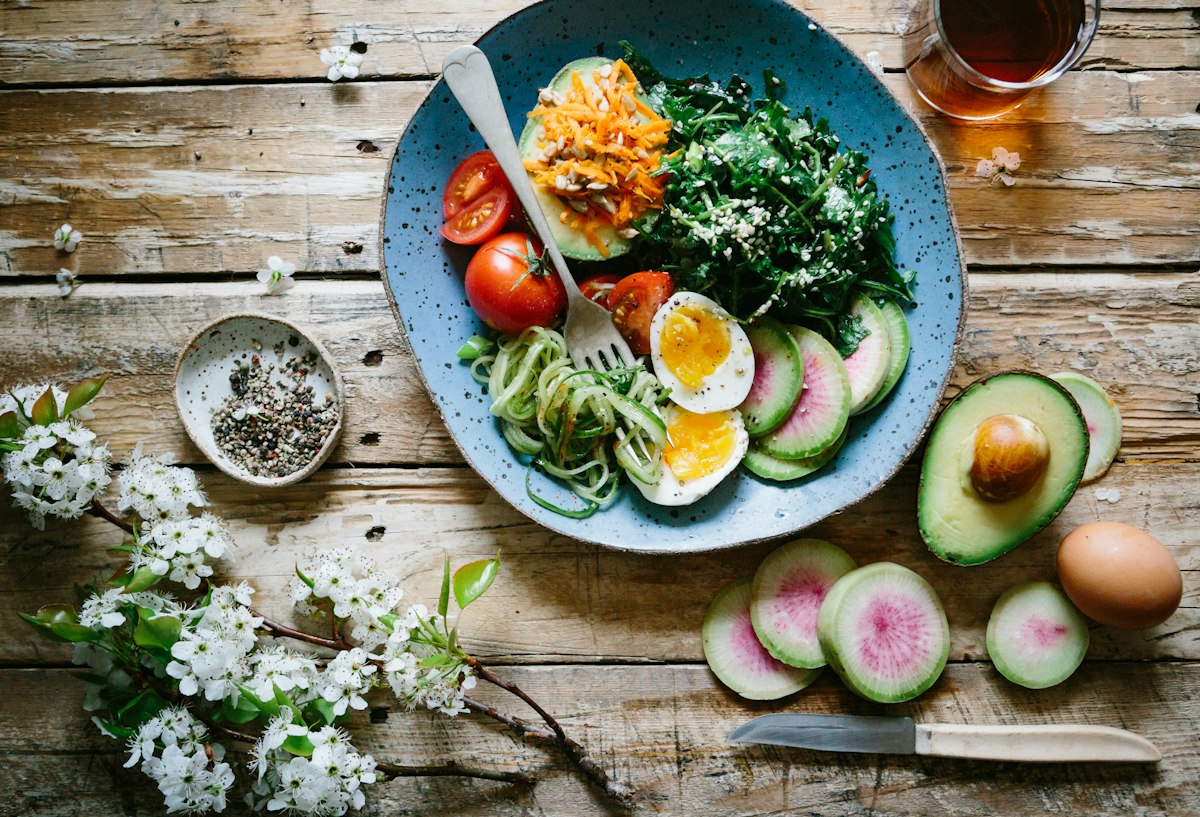
A realistic day might look like: Greek yogurt with berries mid-morning, a few bites of chicken and roasted vegetables at lunch, a cheese stick or boiled egg in the afternoon, and a small portion of salmon with sweet potato and greens for dinner. None of it is large. All of it is dense.
The order matters as much as the contents: protein, then produce, then carbs and fats. If you fill up after three bites — and you might — at least those three bites did the most important work.
Hydration and the foods that go down easily
Dehydration is one of the most underestimated problems on Mounjaro. Because the medication blunts thirst along with hunger, a lot of people simply forget to drink — and mild dehydration shows up as fatigue, headaches, constipation, and dizziness that get blamed on the medication itself.
Aim to sip water steadily through the day rather than chugging it, and avoid drinking large amounts right before or during meals — filling your already-slow stomach with liquid leaves no room for food. A practical rhythm is to drink between meals and take only small sips with food. If plain water is unappealing, unsweetened sparkling water, herbal tea, or water with a squeeze of citrus all count.
When your stomach is touchy, lean on foods that go down easily without being nutritionally empty:
- Smooth, protein-rich options: Greek yogurt, kefir, cottage cheese, a protein shake, or blended soups.
- Soft proteins: eggs, flaked fish, slow-cooked chicken, lentils, tofu.
- Gentle produce: cooked carrots, zucchini, spinach, bananas, melon, and well-cooked vegetables.
- Cooler, blander textures when nausea hits: a smoothie often goes down when a hot, fragrant plate won’t.
The trick is making “easy to eat” overlap with “worth eating.” A protein smoothie with yogurt, fruit, and a spoon of nut butter is easy and dense. Crackers are easy and empty — which brings us to the mistakes.
Common mistakes that quietly stall progress
Most people on Mounjaro don’t fail because of the big things. They get tripped up by small habits that compound:
- Grazing on low-nutrient “easy” foods. When eating feels like a chore, crackers, toast, pretzels, and a few bites of whatever’s nearby become the default. It’s the path of least resistance, but it crowds out protein and produce and leaves you under-nourished even while losing weight.
- Not drinking enough. As above — the blunted thirst signal means dehydration sneaks up on you. Many “side effects” are really just under-hydration in disguise.
- Ignoring protein. This is the big one. Under-eating protein during rapid weight loss costs you muscle, which can slow your metabolism and make regain easier later. If you only optimize one thing, optimize this — the high-protein meals for Mounjaro post breaks down exactly how to hit your target on a tiny appetite.
- Eating trigger foods that make you miserable. Greasy, fried, very sweet, or heavily processed foods tend to sit badly when your stomach empties slowly. There’s a whole category worth steering clear of — see foods to avoid on Mounjaro for the specifics.
- Skipping meals entirely because you’re “not hungry.” Going all day on nothing then eating one large meal at night is a recipe for nausea and poor nutrition. Plan the mini-meals even when hunger doesn’t remind you.
Making your small meals count
Here’s the catch with eating so little: it becomes genuinely hard to know whether your tiny meals are adding up to enough protein and not too few calories. Eyeballing it rarely works when portions are this small, and the gap between “feels like enough” and “actually enough protein” is where muscle loss hides.
This is where logging earns its keep. Tracking what you eat — even loosely — turns a vague sense of “I think I ate okay” into real numbers you can act on. The friction, of course, is that nobody wants to weigh and enter four to six mini-meals a day. Nutrify is built to remove that friction: you snap a photo of whatever’s on your plate and it auto-logs the calories, protein, and macros, so you can see at a glance whether your small meals are still landing on your targets — especially that all-important protein number — without typing anything in.
The point isn’t obsessive tracking. It’s a quick reality check so you can adjust before a week of accidental under-eating turns into lost muscle.
FAQ
How many calories should I eat on Mounjaro? There’s no universal number — it depends on your size, activity, and goals, and your doctor or dietitian can set a target. The medication naturally drives intake down, so the bigger risk for many people is eating too little and missing protein, rather than eating too much.
Should I eat even when I’m not hungry? Generally, yes — within reason. Because Mounjaro suppresses hunger cues, waiting for hunger can mean barely eating all day. Most people do better eating small, planned mini-meals on a loose schedule, prioritizing protein. Discuss your specific plan with your healthcare provider.
What foods help with Mounjaro nausea? Bland, lower-fat, easy-to-digest foods tend to be gentlest: yogurt, eggs, soups, smoothies, cooked vegetables, bananas, and lean proteins. Eating smaller portions slowly, avoiding greasy or very sweet foods, and not over-filling your stomach with liquids all help.
Do I still need to count calories or protein if the medication does the work? The medication controls appetite, not nutrition quality. Loose tracking still matters — mainly to confirm you’re getting enough protein and not drastically under-eating, both of which protect muscle and energy during weight loss.
Can I drink water with meals? Small sips are fine, but avoid drinking large amounts right before or during meals — liquid fills your slow-emptying stomach and leaves no room for food. Do most of your hydrating between meals instead.
The bottom line
Eating well on Mounjaro comes down to a simple pattern: small, frequent mini-meals built around protein first, then produce, then smart carbs and fats — with steady hydration between meals and a wide berth around heavy, greasy foods. Because portions are so small, the quality of each bite matters more than ever, and a quick photo-log with a tool like Nutrify makes it easy to confirm your tiny meals still add up to enough protein and the right calories. Get the structure right, and the medication handles the rest.
Related guides
- Mounjaro Meal Plan — a ready-to-use 3-day plan.
- High Protein Meals for Mounjaro — hit your protein target on a small appetite.
- Foods to Avoid on Mounjaro — what commonly makes side effects worse.