What to Eat on Mounjaro for Breakfast: Easy High-Protein Ideas
If you’re wondering what to eat on Mounjaro for breakfast, you’ve probably noticed that mornings are their own special challenge on this medication — the appetite suppression often feels strongest first thing, breakfast can trigger nausea or early fullness, and the easiest “solution” (skipping it) quietly costs you the protein you need most. This guide is just about breakfast: why it’s tricky, how to build an easy high-protein morning meal on a tiny appetite, and a long list of specific UK ideas with rough protein amounts — including no-cook and liquid options for the mornings you genuinely can’t face food.
A quick note before we start: This is general nutrition information, not medical advice. Mounjaro (tirzepatide) is a prescription medication, and your nutrition, calorie, and protein targets should be discussed with your doctor, pharmacist, or a registered dietitian who knows your full history. Nothing here is dosing advice, and nothing here should prompt you to change or stop your medication. If morning nausea is severe, persistent, or comes with vomiting, speak to your prescriber.
Why breakfast is the trickiest meal on Mounjaro
There are a few reasons the first meal of the day catches people out.
Appetite suppression often peaks in the morning. Mounjaro slows gastric emptying, so food sits in your stomach longer. If you ate dinner the night before, you may genuinely still feel full when you wake up — the idea of breakfast can be off-putting before you’ve even got out of bed. Many people also report that morning nausea is one of the more common side effects, especially in the days after a dose.
So people skip breakfast — and miss protein. This is the real problem. Skipping breakfast isn’t dangerous in itself, but on Mounjaro your total daily intake is already low, and your appetite tends to fade further as the day goes on for some people. Miss breakfast and you’ve lost one of your few realistic chances to bank protein. Over weeks, a string of low-protein days is exactly what puts muscle mass at risk while you lose weight. (For why protein is the lever that protects muscle in a deficit, see High Protein Meals for Mounjaro.)
The default breakfast foods are low in protein. Toast, a bit of cereal, a croissant, fruit — these are easy on a queasy stomach but give you almost no protein. When you can only manage a few bites, those bites need to count.
So the goal for breakfast on Mounjaro isn’t a big plate. It’s maximum protein per mouthful, in a format your stomach will actually accept.
How to build an easy high-protein breakfast on a small appetite
A few principles make this manageable:
- Anchor on protein first. Aim for roughly 20–30g of protein at breakfast if you can. Pick the protein, then add a small amount of carbs or fruit around it — not the other way round.
- Go small-volume and protein-dense. A 170g pot of Greek yoghurt has more protein and far less bulk than a big bowl of cereal. Concentrated beats bulky when your stomach fills fast.
- Keep it low-effort. On a bad-appetite morning, anything that needs cooking and standing over a pan often gets skipped. Have no-cook and grab-and-go options ready.
- Drink it if you can’t chew it. On the worst mornings, a cold protein shake or smoothie may go down when solid food won’t. Liquids feel lighter and tend to sit better than a heavy fry-up.
- Time it sensibly. If mornings are roughest, you don’t have to eat the second you wake. A mid-morning “breakfast” at 10 or 11am still counts. Eat when the nausea eases.
- Cool and plain often beats hot and greasy. Many people find cold, bland, or lightly flavoured foods sit better than rich, fatty, or strong-smelling ones when queasy.
A quick tip: logging breakfast makes it obvious whether you actually hit your protein, rather than guessing. Nutrify lets you snap a photo of your meal and auto-logs the calories and protein, so you can see your morning total at a glance and know how much you still need across the rest of the day.
Savoury high-protein breakfast ideas (UK)
Savoury options tend to be the most protein-dense. Approximate protein per serving in brackets — exact figures vary by brand and portion.
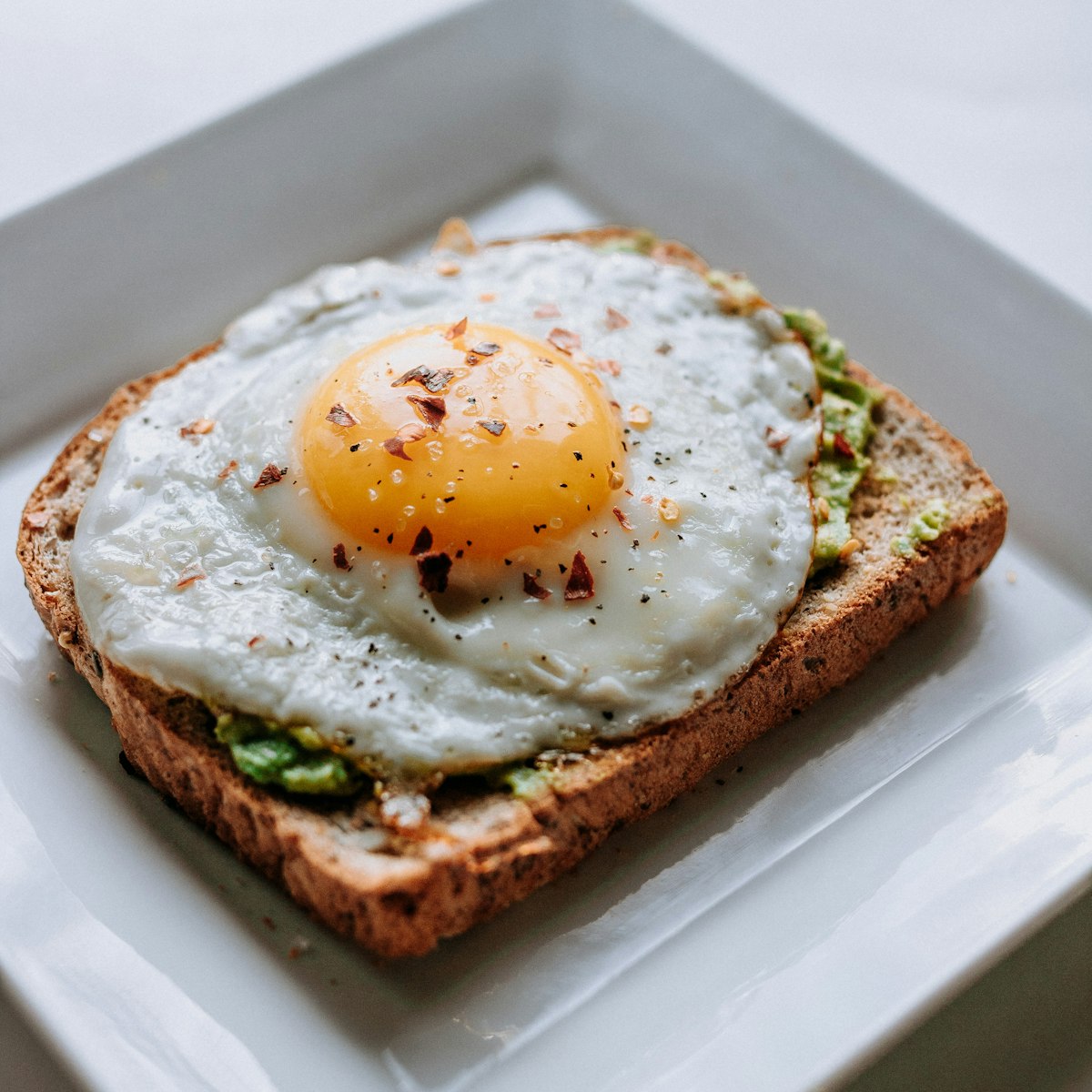
- Two scrambled or poached eggs on one slice of wholemeal toast (~16–18g). The classic. Add a few slices of smoked salmon to push it past 25g.
- Three-egg omelette with a little cheese (~22–26g). Keep it small and thin if volume is a problem.
- Greek yoghurt savoury bowl — plain full-fat or 0% Greek yoghurt with a poached egg on top and black pepper (~20g). Sounds odd, works well.
- Baked beans on one slice of wholemeal toast with a poached egg (~18–22g). Beans add a little protein and fibre; the egg does the heavy lifting.
- Smoked salmon and cottage cheese on a thin slice of rye or wholemeal (~22–25g). No cooking at all.
- Mushroom and spinach egg muffins (make a batch on Sunday, eat 2–3 cold or reheated) (~6–7g each). Brilliant for grab-and-go.
- Leftover roast chicken or turkey with a boiled egg (~25g+). Breakfast doesn’t have to look like breakfast — last night’s protein works fine.
Sweet high-protein breakfast ideas (UK)
If you lean sweet in the mornings, you can still get plenty of protein.
- Skyr or Greek yoghurt with berries and a spoon of mixed seeds (~17–20g). Skyr is especially protein-dense for its size — ideal on a small appetite.
- Overnight oats made with milk and a scoop of protein powder (~25–30g). Make it the night before; eat it cold straight from the fridge. No morning effort.
- High-protein porridge — porridge oats made with milk (not water) plus a scoop of vanilla protein powder or a dollop of Greek yoghurt stirred in (~20–28g). Warming and gentle if you can manage hot food.
- Cottage cheese with banana and a little honey (~14–18g). Cottage cheese is one of the most protein-dense breakfast foods around.
- Protein pancakes (blend a banana, two eggs, a scoop of protein powder) (~25g+). A weekend option when you’ve a bit more appetite.
- Greek yoghurt and berry “fridge pot” layered in a jar the night before (~15–18g). Cold, light, ready to grab.
No-cook and liquid options for bad-appetite mornings
These are your fallbacks for the days nausea or fullness wins — the whole point is that something with protein goes in.
- Cold protein shake — a ready-to-drink one or a scoop of powder in milk or water (~20–30g). Often the single easiest thing to get down when chewing feels impossible. Cold and plain tends to sit best.
- Protein smoothie — milk or Greek yoghurt, a handful of frozen berries, half a banana, a scoop of protein powder (~25–35g). Blend small; sip slowly rather than gulping.
- A pot of skyr or high-protein yoghurt straight from the fridge (~12–18g). No prep, no cooking, light on the stomach.
- A glass of milk with a scoop of protein, or a flavoured milk drink (~15–20g). Minimal effort, lands gently.
- Cottage cheese eaten cold from the pot (~12–14g per 100g). Bland and cool, which many people tolerate better when queasy.
- A couple of boiled eggs prepped the night before (~12g). Cold, no smell from cooking, ready to eat.
Sip liquids slowly — drinking too fast can make fullness and nausea worse when gastric emptying is already slowed.
A note on the rest of your day
Breakfast is one piece. If you want the full picture — how to structure lunch and dinner, daily protein targets, and what to limit — see the pillar Mounjaro Meal Plan and What to Eat on Mounjaro to Lose Weight. This post stays in its lane: getting protein in first thing without a battle.
Frequently asked questions
Should you eat breakfast on Mounjaro? There’s no rule that you must, and skipping it occasionally won’t hurt. But because your total intake is already low, breakfast is a valuable chance to bank protein and avoid drifting through the morning on tea and toast. If you can manage even a small protein-led breakfast — or a shake — it’s usually worth it. A later “breakfast” mid-morning still counts.
What’s a good high-protein breakfast on Mounjaro? Anything that anchors on protein and stays small: Greek yoghurt or skyr with berries, two eggs on wholemeal toast, overnight oats with protein powder, or a cold protein shake. Aim for roughly 20–30g of protein and add carbs or fruit only around it.
What if you feel too sick to eat in the morning? Don’t force a heavy meal. Try something cold, bland, and liquid — a chilled protein shake, a smoothie, a pot of skyr, or a glass of protein milk often goes down when solid food won’t. Sip slowly. Eat later in the morning once the nausea eases rather than skipping entirely. If nausea is severe, persistent, or comes with vomiting, speak to your doctor or pharmacist.
How much protein should breakfast have on Mounjaro? A practical target is around 20–30g, though your overall daily needs depend on your weight, age, and activity — confirm your number with your healthcare team. The aim is to make each small portion as protein-dense as possible since you may not manage large meals.
Is it OK to just have a protein shake for breakfast? On a low-appetite or nauseous morning, yes — a shake that delivers 20–30g of protein is far better than skipping breakfast or having a low-protein snack. It’s a sensible fallback rather than something to feel guilty about. Just aim for more whole foods across the day when your appetite allows.
The bottom line
Breakfast is the trickiest meal on Mounjaro because morning fullness and nausea make it the easiest one to skip — and skipping it quietly costs you protein you can’t easily make up later. The fix isn’t a big plate. Pick a protein-dense, small-volume breakfast, keep it low-effort, and have a cold shake or pot of skyr ready for the mornings food feels impossible. Get protein in first, log it so you know where you stand, and let the rest of the day fall in around it.